


Naturally Boost Energy Levels for a Healthy & Active Summer
While we all strive to enjoy an active and healthy summer – going to the beach, having friends over for cookouts, hauling the kids to summer camp, battling to keep the yard looking good, and playing summer sports – the sunniest season can leave your patients feeling the most drained!
For an energy boost to reinvigorate your patients while they enjoy their favorite summer pastimes, consider prescribing a supplement protocol that naturally supports optimal energy production in every cell.
 Prevent Nutrient Insufficiency and Deficiency for a Healthy Summer
Vitamins and minerals are essential to life and required for many metabolic pathways and fundamental cellular functions, including energy production. Inadequate intake, lack of absorption, or excessive excretion of vitamins and minerals can disrupt optimal cellular function and lead to physical and mental fatigue.1
Most patients consume enough nutrients to avoid overt clinical symptoms of severe nutrient deficiencies, but many fail to reach the Dietary Reference Intakes (DRI) on a consistent, daily basis.1-3 In these cases, daily vitamin and mineral supplementation could be required for optimal health.1 Research shows 11% of adults over 19 years of age in the United States consume an inadequate amount of vitamin B6, and 12% do not consume enough folate, another B vitamin.2
According to data from the 2009–2012 National Health and Nutrition Examination Surveys (NHANES), 2.1% of individuals in the United States do not consume enough vitamin B12 in their diet, 5% do not consume enough thiamin (vitamin B1), 3% do not consume enough riboflavin (vitamin B2), 1.2% do not consume enough niacin (vitamin B3), and a whopping 44% do not consume enough magnesium to meet the minimal DRI.3 Even those who are consuming adequate amounts of vitamins and minerals might not be able to optimally digest and absorb them!2
 Understand the Science of Cellular Energy (ATP) Production
Energy can be challenging to define and study since it has several definitions and can be somewhat subjective from a clinical perspective. Clinically, for your patients, energy could be defined as feelings of well-being, stamina, motivation, and vitality that result in the ability to undertake physical and mental activities daily.
A healthy energy level could also be described as mitochondrial efficiency. Mitochondrial efficiency refers to the ability of the mitochondria to produce cellular energy, adenosine triphosphate (ATP), while minimizing the production of reactive oxygen species (ROS).4 ATP is often called the “energy currency” of the cell, and the production of ATP occurs within the mitochondria.5 The mitochondria can be thought of as cellular batteries, since they produce and provide cellular energy.
ROS contribute to cellular damage, aging, and inefficient cellular function, which is why healthy & efficient mitochondria minimize ROS production. The overall efficiency of mitochondria can be influenced by several factors, including the balance between energy production and consumption, the health of the electron transport chain (ETC), availability of micronutrients, and the effectiveness of the antioxidant systems within the cell.4
According to the laws of physics, a calorie is a unit of energy, and humans consume food with calories so they can be converted into cellular energy. Unfortunately, the conversion does not always occur as planned or, seemingly, as it is supposed to. For example, a high-calorie food is cheesecake, but most of us would not eat cheesecake to feel more energetic!
 Boost Production of Adenosine Triphosphate (ATP) – Cellular Energy – for an Active & Healthy Summer
To understand why eating cheesecake might not produce a healthy energy level, one must explore and understand the science of how the body produces and uses energy. Ultimately, food is the source of energy for the body, but the food must be digested, absorbed, and eventually converted into the energy molecule used by cells – adenosine triphosphate (ATP).
Approximately one BILLION molecules of ATP are present in a typical cell at a given time, and, in most cells, this amount of ATP is used and replaced every 1 to 2 minutes. Therefore, the complex process by which ATP is produced must be a highly efficient system that quickly extracts energy from the macronutrients and micronutrients in food. Macronutrients include carbohydrates, proteins, and fat. The vitamins, minerals, and other micronutrients in foods are critical for the amazing transformation of food into ATP within the mitochondria.1
 The Micro-Nutrients Required for Cellular Energy (ATP) Production
Research does not show any benefit from consuming large amounts of macronutrients (cheesecake), but micronutrient intake can have a significant impact on energy levels and mitochondrial function. Wesseling et al. determined that avoiding nutrient deficiencies in general helps maintain metabolic flexibility by optimizing mitochondrial function.4
All of the B vitamins, with the exception of folate, are directly involved in and work synergistically together to power the energy-production system within the cellular mitochondria. Therefore, an adequate daily supply of each B vitamin is required for the optimal production of ATP, and even a minor deficiency in any one of the B vitamins could limit energy production.1
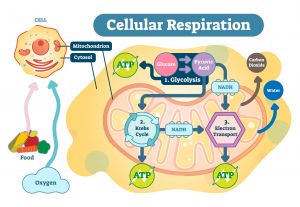 Oxidative phosphorylation requires nicotinamide adenine dinucleotide (NAD+), flavin adenine dinucleotide (FAD), and coenzyme Q10, which are derived from micronutrients. NAD+ is derived from niacin (vitamin B3) and FAD is derived from riboflavin (vitamin B2). The production of CoQ10 is dependent upon adequate levels of riboflavin (B2), niacin (B3), B6, B12, folic acid, pantothenic acid, and vitamin C. Vitamin B12 is also necessary for ATP production and mitochondrial efficiency via its involvement in methionine metabolism, folic acid metabolism, and fatty acid metabolism. Folic acid (vitamin B9), selenium, and zinc are critical for optimal DNA repair.4
Vitamins C, K, and E influence the optimal function of the mitochondria by supporting the antioxidant defenses. Furthermore, vitamin C contributes to the synthesis of the amino acid carnitine, which is essential for transporting fatty acids into mitochondria, promoting acetyl-CoA supply and thus ATP production, reducing the accumulation of toxic metabolites, providing antioxidant support, stimulating mitochondrial biogenesis, and maintaining the integrity of the mitochondrial membrane. Vitamin K also promotes the mitochondrial enzyme activity involved in energy production, and vitamin E indirectly modulates mitochondrial membrane fluidity and health.4
 Calories from Food Are Not Directly Converted into Cellular Energy (ATP)
As mentioned previously, a calorie is a unit of energy. Therefore, it seems like eating more calories would contribute to higher energy levels, but research suggests otherwise. While it is important to consume enough macronutrients daily, excessive macronutrient and caloric intake (cheesecake) can cause a state of mitochondrial overload, which harms mitochondrial efficiency and cellular energy production.4
Mitochondrial overload leads to the disruption of the equilibrium of mitochondrial dynamics, development of oxidative stress, reduced biogenesis and mitophagy to induce a higher proportion of dysfunctional mitochondria, and an increased risk of insulin resistance. Insulin resistance is associated with impaired mitochondrial function and decreased ATP production.4
Nutrient excess increases the risk of oxidative damage because high NADH levels plus an overloaded membrane potential lead to electron escape from the respiratory chain. After the escape, the electrons can directly react with oxygen, forming ROS. Thus far, research shows caloric restriction via reducing macronutrient intake could improve mitochondrial efficiency by boosting mitochondrial function. Moreover, ROS production decreases with an increase in ATP demand. This is why walking or other physical activity after a large dinner could greatly benefit energy levels and mitochondrial health.4
Overall, low energy requirements (sedentary lifestyle) coupled with high macronutrient intake (too much cheesecake) inhibit mitochondrial fusion, leading to fragmentation and lower mitochondrial efficiency. Excessive nutrient uptake can also hinder autophagic flux, resulting in the accumulation of dysfunctional mitochondria. In contrast, the bioenergetic adaptation that occurs during starvation/macronutrient restriction, which occurs every night while fasting, heals and homogenizes the mitochondrial community when adequate micronutrients are available.4
 Nutrient Deficiencies Reduce Cellular Energy Levels
Magnesium and vitamin B deficiencies are associated with lethargy, fatigue, and inadequate cellular energy production. Thiamin (vitamin B1) deficiency causes a disease called beriberi, which is characterized by symptoms that include fatigue, muscle weakness, and shortness of breath. A riboflavin (vitamin B2), vitamin B6, folate, or vitamin B12 deficiency can cause anemia and increase the risk of developing severe fatigue. Niacin (vitamin B3) deficiency is associated with weakness, loss of appetite, fatigue, and apathy. A pantothenic acid (vitamin B5) deficiency will provoke headaches, fatigue, and insomnia. Magnesium deficiency impairs physical performance and leads to fatigue, lethargy, staggering, muscle weakness, and loss of appetite.1
 The Evidence-Based Supplements that Increase Cellular Energy (ATP) Levels
Further evidence of the role nutrients play in energy production can be gleaned from the clinical studies that have assessed the effects of supplementation on energy levels.
A clinical trial of high-dose thiamine (vitamin B1) in sixteen young athletes for three days increased blood thiamine levels and significantly decreased fatigue after a cycling exercise. Another study included thirty-two adults who participated in an ultramarathon. The thirty-two participants were given either 100mg of riboflavin (vitamin B2) or a placebo shortly before the beginning of the race and again once they had completed just over half the marathon. Muscle pain ratings during and immediately after the race were significantly lower in the athletes who received vitamin B2. When performance was measured three and five days after the ultramarathon, 400-minute run times were significantly faster for those who took the riboflavin, which suggests supplementation may have a beneficial effect on fatigue, recovery, and available ATP (energy) levels.1
 Ensure Adequate Magnesium Intake for Optimal Production and Use of ATP (Cellular Energy)
Magnesium status also affects energy levels because magnesium plays a predominant role in the utilization of ATP in the body. Every molecule of ATP must bind to magnesium to convert into its biologically functional form, which is a Magnesium-ATP (Mg-ATP) complex. In the mitochondria, the Mg-ATP complexes export the mitochondrial ATP from the mitochondria into the cell so the ATP can be used as energy outside the mitochondria.1
In vitro research demonstrates increasing the magnesium concentration by one third from 0.8 mM to 1.2 mM, which is still within biologically plausible conditions, improves the cellular energy level in neurons. The higher magnesium concentration significantly increases mitochondrial function by an impressive 68% within four hours, leading to twice as much neuronal ATP production.6
One clinical trial discovered four weeks of daily magnesium supplementation reduced fatigue in twenty-five female adults.1 In another clinical trial, participants who supplemented with a synergistic blend of B-vitamins and minerals, including magnesium, for 28 days reported improved ratings of alertness, mental and physical stamina, and ability to concentrate.7
A clinical study of physically active college students found that endurance performance, which requires cellular energy, increased after magnesium supplementation. Furthermore, a randomized controlled trial that included 26 untrained young adults demonstrated seven weeks of magnesium supplementation significantly improved muscle strength compared with a placebo. Research shows higher magnesium intakes are associated with lower oxygen needs and better cardiorespiratory function in aerobic exercise, which indicates magnesium contributes to efficient energy metabolism to improve endurance.1
 Optimize Cellular Energy (ATP) Production to Minimize Pain for an Active & Healthy Summer
Beyond the energy boost provided by ATP, evidence also shows ATP is comparable to morphine for reducing pain. Less pain could contribute to feelings of well-being, vitality, and more subjective energy when mitochondria are functioning optimally.5 Experts hypothesize inadequate nutrient intake, absorption, and status could lead to mitochondrial dysfunction that results in pain.8,9
 Supplement with Ashwagandha to Boost Mitochondrial Function and Energy Levels
Research shows botanical extracts can also support an improved energy level. Ashwagandha (Withania somnifera), a botanical medicine prescribed by Ayurvedic practitioners for thousands of years, exerts significant beneficial effects on energy, mitochondrial health, and athletic performance via several physiologic mechanisms. Research shows Ashwagandha extract improves mitochondrial function, increases hemoglobin concentration and red blood cell counts, optimizes oxygen delivery to muscles, boosts aerobic capacity in athletes, provides antioxidant protection, and enhances energy production. Athletes report they supplement with Ashwagandha for improved muscular strength, resistance to fatigue, recovery from exercise, and competitive advantage.10-13
A clinical trial with 50 participants found that supplementation with an Ashwagandha extract led to increased VO2 max, enhanced cardiorespiratory endurance, and improved quality of life in healthy athletes. The results suggest that Ashwagandha root extract improves the function of the cardiovascular system by increasing the VO2 max levels, which determine an athlete’s ability to take in, transport, and utilize oxygen. The VO2 max level represents long-term aerobic and cardiovascular endurance capabilities, and the VO2 max test is considered the gold standard for measuring cardiorespiratory fitness in athletes.10,11,13
 Choose Foods Naturally High in Vitamin C for a Healthy Summer & Increased Energy Levels
Clinical research suggests the consumption of foods naturally high in vitamin C could significantly decrease fatigue and increase vigor/energy levels in certain patient populations.14 As noted above, vitamin C provides antioxidant support to the mitochondria and is required for the production of CoQ10.4
Research shows gram for gram, gold kiwifruit has just over three times as much vitamin C as an orange. Kiwifruit is also a good source of vitamin E and provides small amounts of many additional vitamins and minerals.15 A clinical study that included 35 young adult male participants with mood disturbance determined the consumption of two kiwifruits daily for 6 weeks significantly decreased fatigue by 38% and increased vigor by 31%.14
 Prescribe an Active & Healthy Summer to Your Patients!
In conclusion, there is strong evidence that vitamins, minerals, botanical extracts, and other nutrients are involved in and support optimal cellular energy production, resulting in notable benefits from regular supplementation. Vitamins and minerals, including B vitamins and magnesium, are required to extract energy from food and present it in a bioavailable form so it can be transformed into and used as cellular energy.1
The organs and tissues that produce feelings of physical and mental energy – skeletal muscle, heart muscle, and the brain – demand the most ATP and; therefore, nutrients.1 Remarkably, the brain uses more ATP than any other organ in the body, consuming approximately twenty-five percent of the total energy available.5
While severe nutrient deficiencies are rare in the modern world, there is evidence that even slight nutrient insufficiencies can result in reduced energy levels and fatigue. Supplementation studies confirm appropriate doses of B vitamins, magnesium, botanical extracts, and other nutrients could alleviate fatigue while improving mental and physical performance this summer.1

Order the Regular or Expanded Adrenal Stress Index for all patients with fatigue for insight into the health of the HPA axis, mitochondrial function, fasting and non-fasting insulin levels, inflammation, and more!
To place a test order, click here. As a reminder, DiagnosTechs can drop ship test kits directly to your patients. You may select this option at the top of the order form.
Please visit our Provider Tools page for information about Adrenal Restoration, Testing Guidelines, Chronic Stress, and more.
 References:
- Tardy AL, Pouteau E, Marquez D, et al. Vitamins and Minerals for Energy, Fatigue and Cognition: A Narrative Review of the Biochemical and Clinical Evidence. Nutrients. 2020;12(1):228. doi:10.3390/nu12010228
- Do you need supplements? An evidence-based discussion – part I. InterPlexus. Published January 25, 2022. Accessed March 3, 2025.
- Newman JC, Malek AM, Hunt KJ, et al. Nutrients in the US Diet: Naturally Occurring or Enriched/Fortified Food and Beverage Sources, Plus Dietary Supplements: NHANES 2009-2012. J Nutr. 2019;149(8):1404-1412. doi:10.1093/jn/nxz066
- Poljšak B, Milisav I. Decreasing Intracellular Entropy by Increasing Mitochondrial Efficiency and Reducing ROS Formation-The Effect on the Ageing Process and Age-Related Damage. Int J Mol Sci. 2024;25(12):6321. doi:10.3390/ijms25126321
- Dunn J, Grider M. Physiology, Adenosine Triphosphate – statpearls – NCBI bookshelf. Physiology, Adenosine Triphosphate. Published February 17, 2022. Accessed May 20, 2022.
- Hausenblas HA, Lynch T, Hooper S, et al. Magnesium-L-threonate improves sleep quality and daytime functioning in adults with self-reported sleep problems: A randomized controlled trial. Sleep Med X. 2024;8:100121. doi:10.1016/j.sleepx.2024.100121
- Kennedy DO, Veasey RC, Watson AW, et al. Vitamins and psychological functioning: a mobile phone assessment of the effects of a B vitamin complex, vitamin C and minerals on cognitive performance and subjective mood and energy. Hum Psychopharmacol. 2011;26(4-5):338-47. doi:10.1002/hup.1216
- Dodd FL, Kennedy DO, Stevenson EJ, et al. Acute and chronic effects of multivitamin/mineral supplementation on objective and subjective energy measures. Nutr Metab (Lond). 2020;17:16. doi:10.1186/s12986-020-00435-1
- Flatters SJ. The contribution of mitochondria to sensory processing and pain. Prog Mol Biol Transl Sci. 2015;131:119-46. doi:10.1016/bs.pmbts.2014.12.004
- Singh N, Bhalla M, de Jager P, et al. An overview on ashwagandha: a Rasayana (rejuvenator) of Ayurveda. Afr J Tradit Complement Altern Med. 2011;8(5 Suppl):208-213. doi:10.4314/ajtcam.v8i5S.9
- Choudhary B, Shetty A, Langade DG. Efficacy of Ashwagandha (Withania somnifera [L.] Dunal) in improving cardiorespiratory endurance in healthy athletic adults. Ayu. 2015;36(1):63-68. doi:10.4103/0974-8520.169002
- Ahrendt DM. Ergogenic aids: counseling the athlete. Am Fam Physician. 2001;63(5):913-22.
- Pérez-Gómez J, Villafaina S, Adsuar JC, et al. Effects of Ashwagandha (Withania somnifera) on VO2max: A Systematic Review and Meta-Analysis. Nutrients. 2020;12(4):1119. doi:10.3390/nu12041119
- Carr AC, Bozonet SM, Pullar JM, Vissers MC. Mood improvement in young adult males following supplementation with gold kiwifruit, a high-vitamin C food. J Nutr Sci. 2013;2:e24. doi:10.1017/jns.2013.12
- Richardson DP, Ansell J, Drummond LN. The nutritional and health attributes of kiwifruit: a review. Eur J Nutr. 2018;57(8):2659-2676. doi:10.1007/s00394-018-1627-z